Corn Puffs for Babies – Healthy Snack or Just Fun?
Corn puffs are a popular snack among toddlers and convenient for your changing bag, but how healthy are they really? Here’s what they contain, how they affect your baby’s teeth and nutrition, and smart tips on using them for feeding and chewing practice.

Read time: 2 m
Verified by Sara Ask
Licensed dietitian
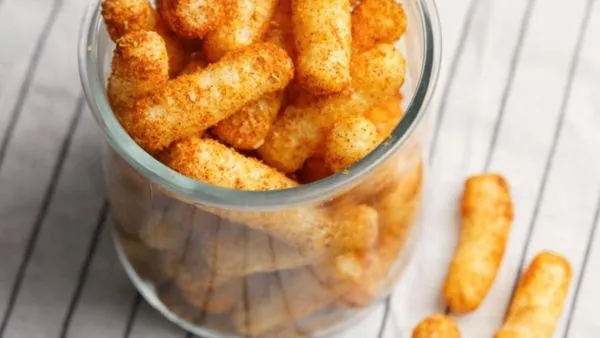
What Are Corn Puffs Made Of?
Most corn puffs are mainly made of corn, sometimes with a little sunflower or rapeseed oil. They are high in carbohydrates and contain a small amount of protein and fat. 100 grams of corn puffs provide roughly the same energy as 100 grams of popcorn, but each puff is very low in energy.
Caries risk:
Even though each puff is low in energy, the carbohydrates can turn into sugar in the mouth, which may contribute to tooth decay if your baby snacks frequently. Corn puffs should be an occasional treat, not a replacement for meals.
Do Carbs Turn Into Sugar?
Carbohydrates naturally break down into sugar in the body – it’s your body’s main energy source. The problem is not that corn puffs turn into sugar, but that they do not provide vitamins or minerals like fruit, vegetables, or porridge.
Benefits of Corn Puffs
- Chewing practice: Perfect texture to develop oral motor skills. Easy to grasp and melts in the mouth.
- Baby-friendly meals: Can be used to thicken soups or make food easier to eat.
- Creative enrichment: Dip in hummus, soft cheese, or pâté for extra nutrients.
Don’t Give Corn Puffs Too Easily
Corn puffs are convenient, but remember that your baby may be signalling other needs – attention, play, or a fresh nappy. Use corn puffs as a supplement, not a solution for all fussiness.
Want more tips on healthy snacks for your baby? Read more here!
Verified by Sara Ask
Licensed dietitian

More from Preggers

Hundreds of related articles, podcasts & more waiting for you in the Preggers app.
Download Preggers today.