Breastfeeding the very first time
Right after birth, your newborn often experiences a period of alertness lasting around two hours. This is usually when the very first feeding occurs – a precious and meaningful moment for both you and your baby.

Read time: 2 m
Verified by Ingela Ågren
Certified Midwife
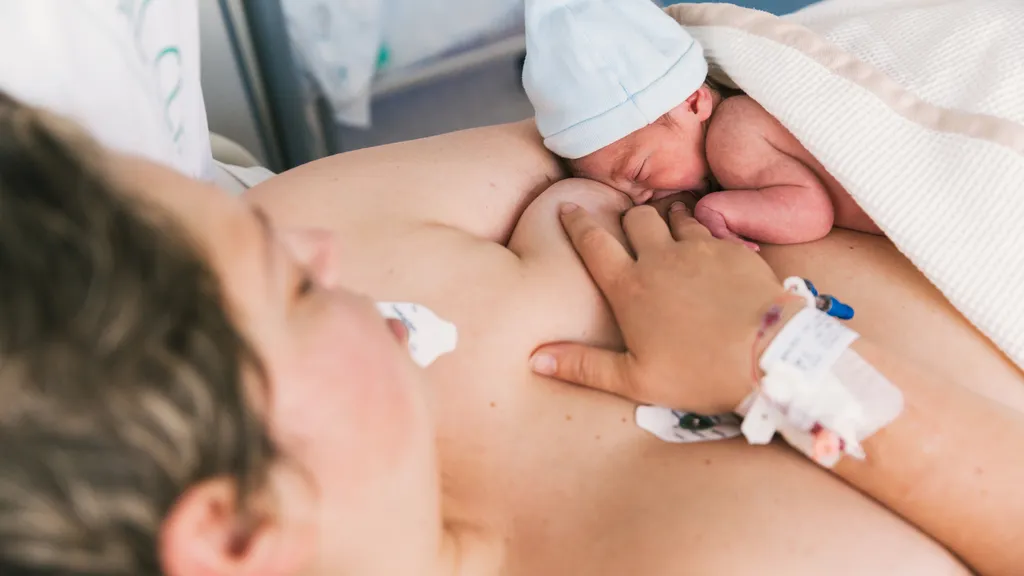
Skin-to-skin – the beginning of it all
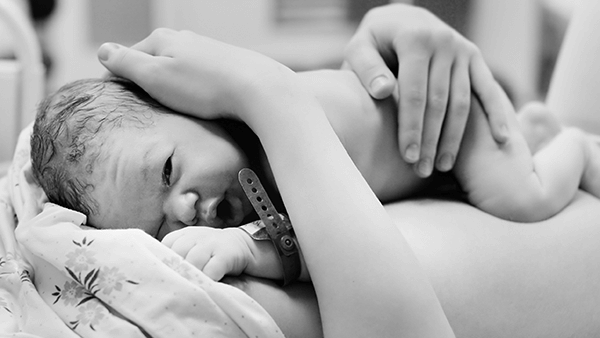
During these first hours, it’s best for your baby to be placed skin-to-skin with you. Feeling your warmth, scent, and heartbeat helps your baby feel safe and start searching for the breast.
Your baby’s natural reflexes
If you watch closely, you may notice your baby moving their mouth, licking their lips, or sucking on their hand. This is called the rooting reflex, your baby’s way of signaling they want to feed. Many newborns can even find the breast on their own if allowed to move at their own pace.
Advertisement
When feeding takes time
For some, it happens quickly; for others, it may take longer – and both are completely normal. Be patient. If your baby doesn’t latch immediately, keep them skin-to-skin. Sometimes your partner can hold the baby against their skin if you need a rest.
If the first feeding is delayed, gently hand express a few drops of milk to help stimulate production.
Benefits of skin-to-skin
Babies who stay close in the first hours:
- Maintain body temperature better
- Cry less
- Have more stable blood sugar
- Show clearer cues that they want to feed
The first feeding is not just about nutrition – it’s about closeness, security, and beginning your bond together.
Verified by Ingela Ågren
Certified Midwife

More from Preggers
Hundreds of related articles, podcasts & more waiting for you in the Preggers app.
Download Preggers today.